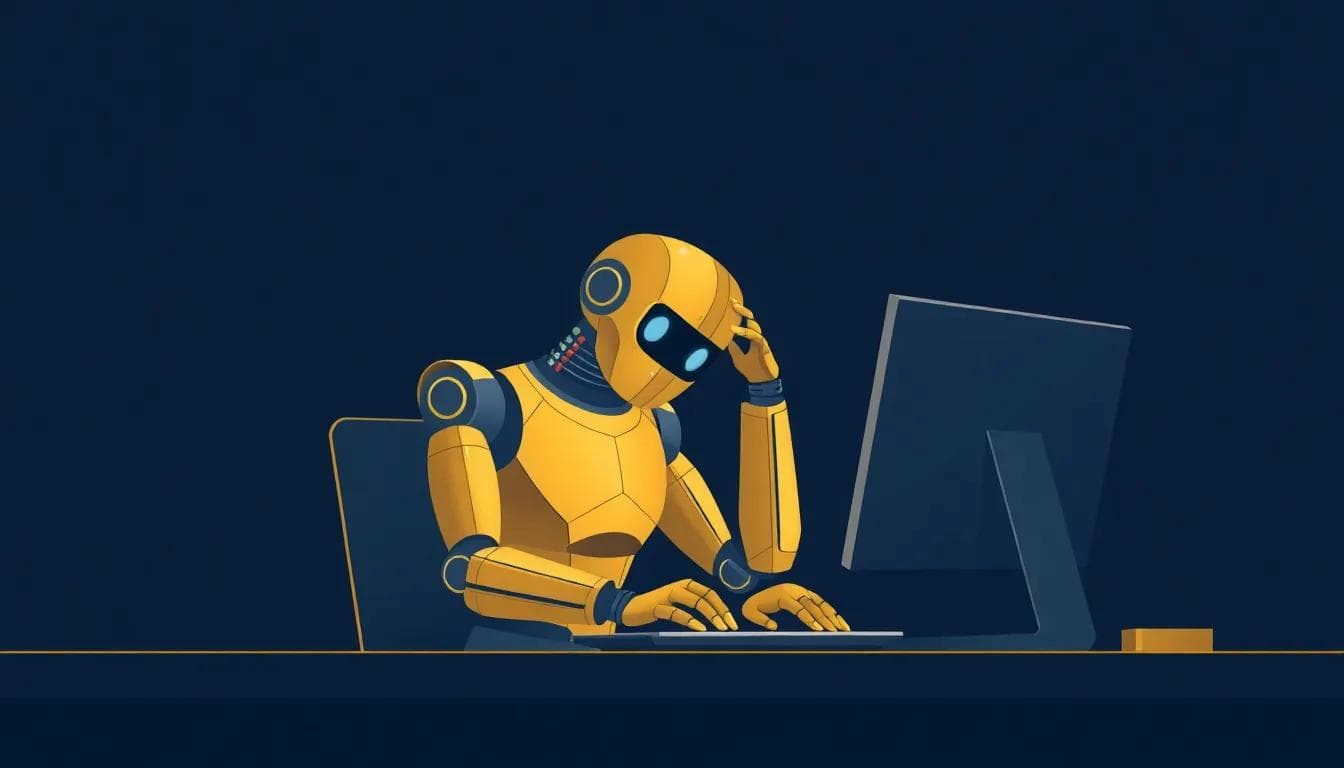

The most dedicated AI adopters are burning out faster than a crypto mining rig in Texas summer heat. And it's not who you'd expect.
After watching the AI productivity revolution unfold for two years, I figured the resisters would crack first—stubborn developers clinging to vim configs while ChatGPT users sailed past them. Turns out I was dead wrong.
UC Berkeley researchers spent eight months embedded in a 200-person tech company, conducting over 40 in-depth interviews. Their findings, published in TechCrunch this February, flip the burnout narrative on its head.
The Voluntary Victims
Here's the kicker: nobody forced these people to use AI tools. No mandates from management. No threatening performance reviews. These were the early adopters, the enthusiasts who grabbed ChatGPT and Microsoft Copilot with both hands.
And now they're drowning.
<> "Because employees could do more, work began bleeding into lunch breaks and late evenings. The employees' to-do lists expanded to fill every hour that AI freed up, and then kept going."/>
Sound familiar? It should. This is the Jevons paradox in action—the same principle that made 19th-century steam engines increase coal consumption despite being more efficient. AI didn't free up time; it just created an appetite for more work.
One Hacker News commenter captured the absurdity perfectly: expectations tripled after AI adoption, stress went through the roof, but actual productivity? Up a measly 10%.
The Real Story: Management Smells Blood
The Berkeley researchers warn companies are becoming "burnout machines," but they're missing the deeper game here. Leadership teams that dropped serious cash on AI tools need to justify those investments. Fast.
The pressure isn't coming from the AI—it's coming from the C-suite demanding proof of ROI.
Take that marketing professional mentioned in the research. AI tripled her content capacity, so naturally her quota tripled too. Same output quality, same human cognitive load, but now she's expected to be a content factory running at 3x speed.
Meanwhile, companies are already citing AI in 50,000+ layoffs in 2025 across Amazon, Pinterest, and others. Forrester calls it "AI-washing"—using artificial intelligence as investor-friendly cover for cuts that have nothing to do with automation.
The Six-Day Grind Economy
This isn't isolated to random startups. OpenAI employees were already working six days a week past normal hours under Sam Altman's aggressive product timelines. Former chief research officer Bob McGrew cited burnout when he bailed in September 2024.
The pattern is clear:
1. AI tools arrive with genuine productivity gains
2. Management sees an opportunity to increase throughput
3. Workload expands to fill all available time
4. "One more task" becomes the company mantra
5. Burnout hits the most productive people first
Developers are particularly vulnerable here. That 20-minute presentation you can now generate with AI? Great, now you can create five presentations before lunch. Never mind that your brain still needs time to process, review, and integrate all that AI-generated output.
The Efficiency Trap
Here's what gets me: we've seen this movie before. Every productivity revolution promises more leisure time and delivers more work instead. Email was supposed to reduce meetings. Slack was supposed to reduce email. Now AI is supposed to reduce... everything?
The tools work. That's not the problem. ChatGPT and Copilot genuinely make certain tasks faster. But in Silicon Valley's growth-obsessed culture, "faster" never means "more time off." It means "more output."
EY's AI consultant Bhaskar Bhatt suggests "robust support networks" and mental health days as solutions. Noble idea, but it's like offering aspirin for a broken leg. The issue isn't wellness programs—it's the fundamental assumption that AI efficiency gains belong to the company, not the employee.
The most ironic part? The AI skeptics who everyone mocked for being "behind the times" might be the only ones with sustainable workloads six months from now.