Forget Space Stations—The Real AI Infrastructure Revolution Is Happening Underwater

# Forget Space Stations—The Real AI Infrastructure Revolution Is Happening Underwater
We've spent years fantasizing about data centers in space. Elon's got his rockets, Jeff's got his Blue Origin dreams, and somewhere a venture capitalist is probably pitching "lunar compute clusters" to anyone who'll listen.
But here's the thing: Aikido Technologies just proved the real innovation isn't looking up—it's looking out to sea.
The Problem Nobody Wanted to Solve
Let's be honest about what's broken in AI infrastructure. Data centers are power hogs. They're cooling nightmares. They're geographically constrained by grid capacity and environmental regulations. And they're getting more expensive to build, not less.
Meanwhile, we've got over 50GW of abandoned floating wind sites scattered across the globe—projects that failed because the economics didn't work. Aikido looked at this and asked the obvious question: Why not repurpose them?
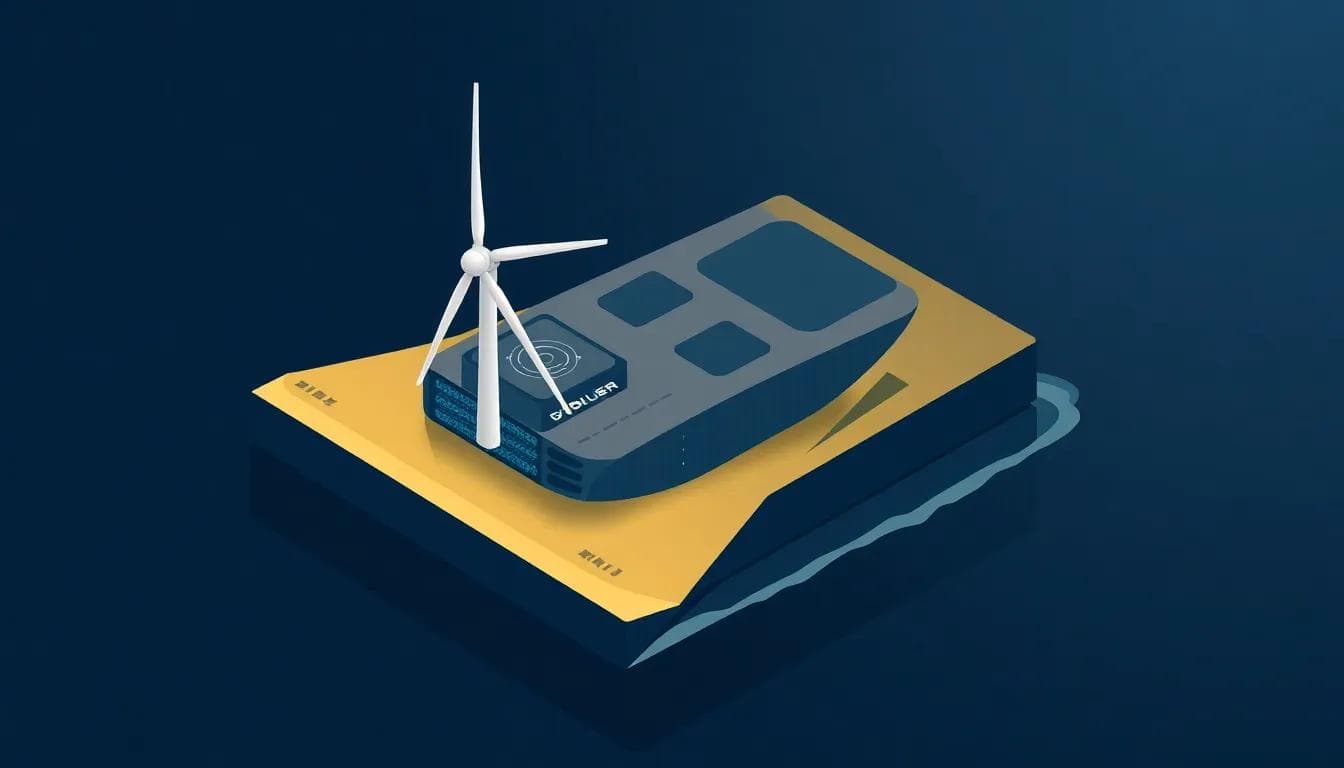
The answer is elegant: combine the wind turbine, the platform, and the data center into one integrated steel unit. No separate construction projects. No redundant infrastructure. Just raw efficiency.
The Numbers Are Ridiculous
Aikido's platform achieves a PUE (power usage effectiveness) of below 1.08—that's exceptional. For context, most data centers hover around 1.5 to 2.0. How? Passive seawater cooling piped directly through the hull. The thermal footprint is so localized it barely registers environmentally.
But the real kicker is assembly speed. Conventional offshore platforms take months to build. Aikido's modular "flat-pack" design? Assembled in under 40 working hours. No welding. No on-site fabrication nightmares. Just pins, steel tubulars, and industrial-grade precision.
That's not incremental improvement. That's a 10x speedup in an industry that desperately needed it.
Why This Actually Matters
<> The geopolitics of AI compute are about to shift dramatically./>
Every nation wants sovereign AI infrastructure. Nobody wants to depend on hyperscalers in California or Virginia. But building data centers on land is politically toxic—environmental concerns, visual impact, power grid strain. Offshore? Suddenly you've got:
- Minimal environmental footprint (localized thermal impact, far from population centers)
- Proven engineering (semi-submersible platforms have 25+ years of O&G deployment history)
- Grid-friendly operation (the onboard wind and battery system covers peak loads, reducing strain when the grid is most stressed)
- Maintenance accessibility (95%+ uptime using existing offshore vessel fleets)
This isn't vaporware. Aikido completed its first platform in late 2024. The company is backed by Bill Gates' Breakthrough Energy program and the U.S. Energy Department. They've raised $4M in oversubscribed seed funding.
The Uncomfortable Truth
Here's where it gets interesting: Aikido is American, federally backed, and already looking to deploy internationally. Why? Because the U.S. offshore wind market is politically radioactive right now. The company is pivoting toward France, Japan, Taiwan, and South Korea—regions with stronger policy support and deeper waters.
That's a telling signal about where the real opportunity is. While American politics gridlock over offshore wind, other nations are quietly building the infrastructure for AI dominance.
The Takeaway
We don't need to go to space to solve AI's infrastructure crisis. We need to go offshore. Aikido's technology proves that sometimes the most futuristic solution is just better engineering applied to proven platforms.
The question isn't whether floating data centers work. The question is: How many will be deployed before the rest of the industry catches up?