The AI Morning Post
Artificial Intelligence • Machine Learning • Future Tech
 Lead Story
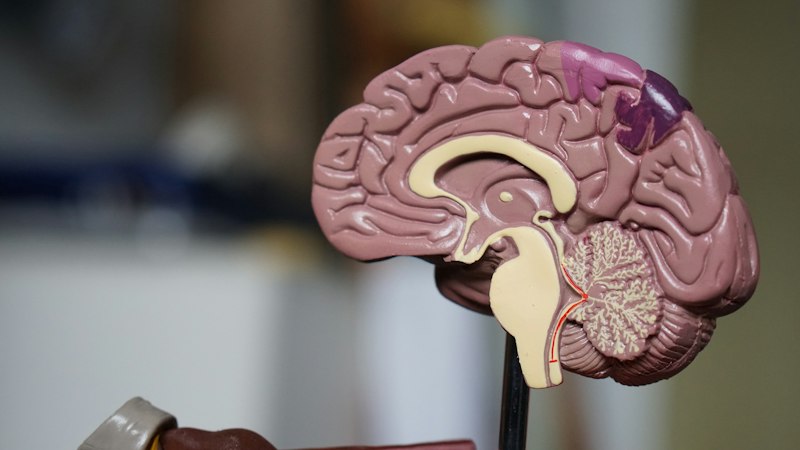
Medical AI Goes Mainstream: Acne Diagnosis Model Signals Healthcare's Democratization Wave
A trending acne severity classification model on HuggingFace represents a broader shift toward specialized medical AI applications built by independent developers, signaling healthcare's transition from tech giants to community-driven innovation.
The emergence of sivanagu1206/acne-severity-model among today's top trending HuggingFace repositories reflects a significant shift in medical AI development. Built using Keras and focused on dermatological assessment, this model represents the growing trend of healthcare professionals and independent developers creating specialized diagnostic tools outside traditional institutional frameworks.
This grassroots approach to medical AI development contrasts sharply with the massive language model arms race dominating headlines. While tech giants focus on general-purpose intelligence, domain experts are quietly building practical tools that could have immediate clinical impact. The model's trending status suggests strong community interest in accessible healthcare applications.
The democratization of medical AI raises important questions about validation, regulation, and deployment standards. As these tools become more sophisticated and accessible, healthcare systems will need to develop frameworks for integrating community-developed AI into clinical workflows while maintaining safety and efficacy standards.
Medical AI Landscape
Deep Dive
The Specialization Paradox: Why Narrow AI Models Are Outpacing General Intelligence
While the industry obsesses over artificial general intelligence, a quiet revolution is unfolding in specialized AI applications. From acne diagnosis to hyperparameter tuning for specific model architectures, today's trending repositories reveal a counterintuitive truth: the most impactful AI development may be happening in narrow, domain-specific applications rather than broad general-purpose systems.
The trending models on HuggingFace today—ranging from medical imaging to financial analysis—represent a fundamental shift in how AI value is created and delivered. These specialized tools don't aim to pass the Turing test or achieve human-level reasoning across domains. Instead, they solve specific, well-defined problems with measurable outcomes and clear value propositions.
This specialization trend reflects economic reality. A dermatology AI that accurately classifies acne severity can be validated, regulated, and deployed far more easily than a general-purpose medical AI. Similarly, a hyperparameter optimization model for Qwen architectures serves a specific community with immediate needs, creating clear adoption pathways and feedback loops.
The implications extend beyond individual applications. As these specialized models proliferate, we're witnessing the emergence of an AI ecosystem where value comes not from singular breakthrough systems, but from networks of interconnected, purpose-built tools. This distributed approach to AI development may ultimately prove more resilient and impactful than the current concentration on monolithic general intelligence systems.
Opinion & Analysis
The Open Source Medical AI Validation Gap
The trending acne severity model highlights a critical challenge: how do we validate community-developed medical AI without stifling innovation? Traditional clinical validation pathways weren't designed for the rapid iteration cycles of open-source development.
We need new frameworks that balance safety with accessibility—perhaps federated validation networks where multiple institutions can contribute validation data while maintaining privacy. The alternative is either unvalidated tools in clinical settings or innovation bottlenecked by bureaucracy.
Why Hyperparameter Tuning Models Matter More Than You Think
The odoriko-yoru/qwen3-4b-lora-sft-hyperparameter-tuning model represents meta-AI development—AI systems that optimize other AI systems. This recursive improvement capability could accelerate model development beyond human optimization capacity.
As models become more complex, automated hyperparameter optimization becomes less luxury and more necessity. These 'AI for AI' tools may prove to be the infrastructure layer that enables the next generation of breakthrough applications.
Tools of the Week
Every week we curate tools that deserve your attention.
Acne Severity Classifier
Keras-based model for dermatological assessment and medical imaging analysis.
DPO Chain-of-Thought Trainer
Direct preference optimization for reasoning-focused language models.
Qwen3 Hyperparameter Optimizer
LoRA fine-tuning automation for 4B parameter language models.
OPT-C4 Research Model
125M parameter model for reproducible language modeling research.
Trending: What's Gaining Momentum
Weekly snapshot of trends across key AI ecosystem platforms.
HuggingFace
Models & Datasets of the WeekGitHub
AI/ML Repositories of the Week🤗 Transformers: the model-definition framework for state-of-the-art machine learning models in text
Tensors and Dynamic neural networks in Python with strong GPU acceleration
scikit-learn: machine learning in Python
Deep Learning for humans
Financial data platform for analysts, quants and AI agents.
YOLOv5 🚀 in PyTorch > ONNX > CoreML > TFLite
Biggest Movers This Week
Weekend Reading
Direct Preference Optimization: Your Language Model is Secretly a Reward Model
The foundational paper behind the trending DPO models, essential for understanding modern alignment techniques.
Medical AI Validation in the Age of Foundation Models
Nature Digital Medicine's latest review on adapting clinical validation for rapid AI development cycles.
The Economics of Specialized vs. General AI Systems
MIT Technology Review's analysis of why narrow AI applications may deliver more immediate economic value than AGI.
Subscribe to AI Morning Post
Get daily AI insights, trending tools, and expert analysis delivered to your inbox every morning. Stay ahead of the curve.
Subscribe NowScan to subscribe on mobile