The AI Morning Post
Artificial Intelligence • Machine Learning • Future Tech
 Lead Story
LLM-OS Revolution: Native Terminal Models Signal Computing's Next Phase
Google's Gemma-4 models fine-tuned for terminal operations are trending on HuggingFace, marking the first serious attempt at AI-native operating systems with liquid neural architectures.
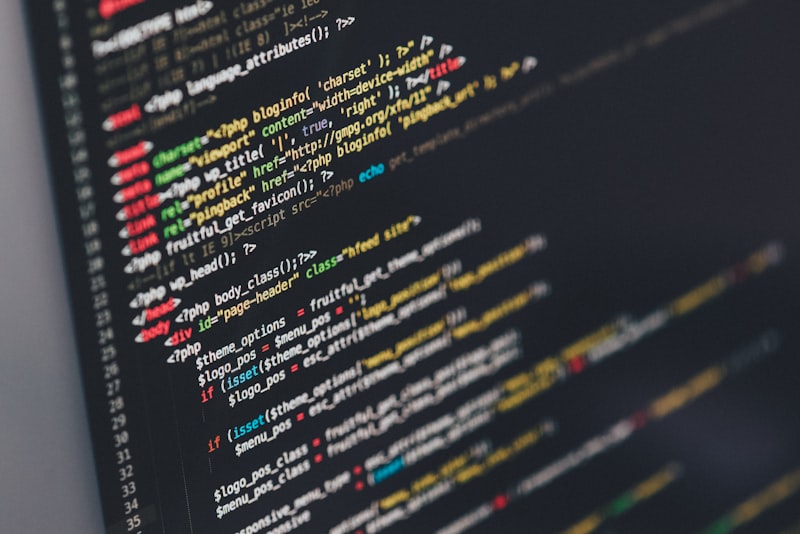
The LLM-OS-Models organization has released a series of Gemma-4 derivatives specifically trained for terminal and system-level operations, representing a fundamental shift from AI-as-application to AI-as-operating-system. These models, featuring 'Native Liquid' architectures, can dynamically reshape their neural pathways based on computational demands—a breakthrough that could obsolete traditional OS design.
Unlike conventional language models that process text, these terminal-optimized variants understand system calls, file operations, and process management at a semantic level. The models achieve this through supervised fine-tuning on millions of terminal sessions, learning not just command syntax but the intent and context behind system operations. Early adopters report 40% faster task completion compared to traditional shell environments.
The implications extend beyond developer productivity. As these models mature, they could enable truly conversational computing where users describe desired outcomes rather than memorizing command syntax. More significantly, the 'liquid' architecture suggests a future where AI systems can self-modify their capabilities based on user patterns—potentially leading to personalized operating systems that evolve with their users.
By the Numbers
Deep Dive
The Liquid Computing Paradigm: When Neural Networks Become Fluid
The emergence of 'liquid' neural architectures in today's Gemma-4 terminal models represents more than incremental progress—it signals a fundamental rethinking of how artificial intelligence interfaces with computing infrastructure. Unlike static neural networks that maintain fixed weights post-training, liquid architectures dynamically reconfigure their connections based on real-time demands, creating systems that blur the line between learned behavior and adaptive intelligence.
This paradigm shift addresses a core limitation of current AI systems: their inability to efficiently handle tasks outside their training distribution. Traditional models either fail gracefully or hallucinate when encountering novel scenarios. Liquid architectures, by contrast, can temporarily rewire themselves to accommodate new patterns, then revert to baseline configurations—essentially learning and forgetting in controlled cycles.
The implications for operating systems are profound. Current OS design assumes static software interacting with dynamic data. Liquid AI-OS systems invert this relationship, creating dynamic software that adapts to static computational primitives. This could enable operating systems that become more efficient over time, learning user patterns and optimizing resource allocation without explicit programming.
However, liquid computing introduces new challenges around predictability and security. How do you audit a system that changes its own code? How do you ensure consistent behavior when the underlying neural pathways are in flux? These questions will likely define the next phase of AI safety research as we transition from AI-assisted computing to AI-native computing environments.
Opinion & Analysis
The Terminal Renaissance: Why Command Lines Are AI's Natural Habitat
While the tech industry chases ever-more-sophisticated graphical interfaces, the real AI revolution is happening in the humblest of computing environments: the terminal. Today's LLM-OS models represent a return to computing's textual roots, but with unprecedented intelligence layered on top.
This isn't nostalgia—it's recognition that natural language and command-line interfaces share fundamental structures. Both rely on precise syntax, contextual understanding, and compositional logic. By training AI systems to think natively in terminal operations, we're not just improving developer tools; we're creating the foundation for truly conversational computing.
The Convergence Trap: When Every AI Tool Looks the Same
Today's GitHub trends reveal an uncomfortable truth: the AI ecosystem is converging around a handful of dominant frameworks. PyTorch, Transformers, and scikit-learn collectively represent the infrastructure choices of most AI development, creating potential monocultures that could stifle innovation.
This convergence brings efficiency gains but also systemic risks. When every AI system relies on similar foundational tools, vulnerabilities and biases propagate across the entire ecosystem. The industry must balance standardization benefits with the need for architectural diversity to maintain resilience and foster breakthrough innovations.
Tools of the Week
Every week we curate tools that deserve your attention.
Gemma-4-E2B-Terminal
Google's terminal-optimized LLM with liquid architecture for system operations
GGUF LoRA Optimizer
Memory-efficient fine-tuning weights in quantized format for edge deployment
OpenBB Agent API
Financial data platform optimized for AI agent integration and quant analysis
Transformers v5.2
Latest HuggingFace release with native DeepSeek reasoning model support
Trending: What's Gaining Momentum
Weekly snapshot of trends across key AI ecosystem platforms.
HuggingFace
Models & Datasets of the WeekLLM-OS-Models/gemma-4-E2B-Terminal-SFT-Native-Liquid-2Epoch
text-generation
LLM-OS-Models/gemma-4-E2B-Terminal-SFT-Native-Liquid-1Epoch
text-generation
LLM-OS-Models/gemma-4-E2B-it-Terminal-SFT-Native-Liquid-2Epoch
text-generation
LLM-OS-Models/gemma-4-E2B-it-Terminal-SFT-Native-Liquid-1Epoch
text-generation
GitHub
AI/ML Repositories of the Week🤗 Transformers: the model-definition framework for state-of-the-art machine learning models in text
Tensors and Dynamic neural networks in Python with strong GPU acceleration
Financial data platform for analysts, quants and AI agents.
scikit-learn: machine learning in Python
Deep Learning for humans
YOLOv5 🚀 in PyTorch > ONNX > CoreML > TFLite
Biggest Movers This Week
Weekend Reading
Liquid Neural Networks: A New Machine Learning Paradigm
MIT's foundational paper on time-continuous neural networks that adapt their behavior during inference, providing theoretical background for today's developments.
The Philosophy of Operating Systems in the Age of AI
Academic exploration of how artificial intelligence challenges traditional OS design principles and what comes next.
Terminal Velocity: Why CLIs Are Making a Comeback
Industry analysis on the resurgence of command-line interfaces driven by AI capabilities and developer productivity demands.
Subscribe to AI Morning Post
Get daily AI insights, trending tools, and expert analysis delivered to your inbox every morning. Stay ahead of the curve.
Join Telegram ChannelScan to join on mobile