The AI Morning Post
Artificial Intelligence • Machine Learning • Future Tech
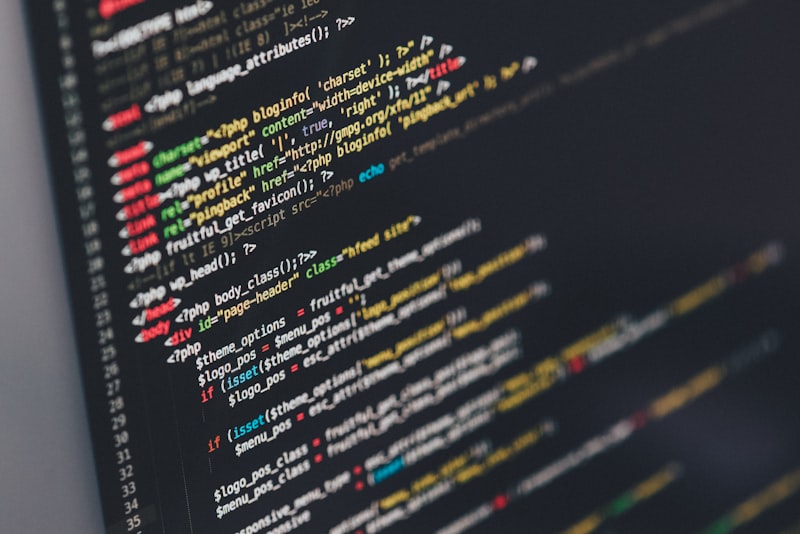 Lead Story
Code Generation Gets a Chinese Challenger: ShenWen CoderV2 Enters the Arena
ShenWen AI's latest coding model surge to #1 on HuggingFace signals intensifying competition in the code generation space, particularly from Chinese developers targeting enterprise markets.
ShenWen CoderV2-GGUF has claimed the top trending spot on HuggingFace, marking another significant entry from Chinese developers into the increasingly competitive code generation market. The GGUF format optimization suggests the model is designed for efficient deployment across diverse hardware configurations, a critical factor for enterprise adoption.
This release comes amid a broader trend of specialized coding models emerging from non-Western AI labs, challenging the dominance of GitHub Copilot and similar tools. The timing coincides with HuggingFace Transformers maintaining its position as the most-starred AI repository, indicating sustained momentum in the open-source AI ecosystem.
The implications extend beyond mere competition. Chinese AI labs are increasingly focusing on practical, deployable solutions rather than benchmark-chasing models. ShenWen's approach of optimizing for edge deployment through GGUF formatting suggests a strategic bet that the future of AI tooling lies in local, privacy-preserving implementations rather than cloud-dependent services.
By the Numbers
Deep Dive
The Great Unbundling: Why AI Development is Going Vertical
The trending models this week tell a story that goes far beyond individual releases. From dermatology-specific classifiers to video understanding systems, we're witnessing the great unbundling of artificial intelligence—a shift from generalist models toward highly specialized, domain-specific solutions that excel in narrow fields.
This vertical approach represents a fundamental rethinking of AI development strategy. Rather than building ever-larger foundation models that attempt to master every domain, developers are increasingly creating purpose-built systems that can be deployed efficiently and cost-effectively for specific use cases. The healthcare sector is leading this charge, with models like the trending skin disease classifier showing how medical AI is moving from research curiosity to deployable tool.
The technical implications are profound. GGUF formatting, Keras implementations, and Mixture of Experts architectures all point toward a common theme: optimization for real-world deployment rather than benchmark performance. This shift suggests we're entering a maturation phase where AI development is guided more by practical constraints than theoretical possibilities.
Looking ahead, this trend toward specialization will likely accelerate as organizations realize they don't need GPT-4 level capabilities to solve most business problems. The winners will be those who can deliver 80% of the performance at 20% of the cost—precisely what these specialized models promise to achieve.
Opinion & Analysis
The End of the Foundation Model Gold Rush
This week's trending models signal something important: the foundation model gold rush may be ending. Instead of racing to build the largest possible model, developers are asking a more practical question—what's the smallest model that can solve this specific problem effectively?
This shift toward specialization isn't just about efficiency; it's about sustainability. Organizations are discovering that deploying GPT-4 for every task is like using a Ferrari for grocery runs—impressive but impractical. The future belongs to the Toyota Corollas of AI: reliable, efficient, and purpose-built.
Chinese AI Labs Are Playing a Different Game
While Western AI labs chase AGI headlines, Chinese developers like ShenWen AI are quietly building practical tools that solve real problems. Their focus on GGUF optimization and edge deployment reveals a fundamentally different approach to AI development—one prioritizing utility over spectacle.
This pragmatic approach may prove more commercially viable than the moonshot mentality dominating Silicon Valley. Sometimes the tortoise wins the race, and Chinese AI labs seem content to be the tortoise.
Tools of the Week
Every week we curate tools that deserve your attention.
ShenWen CoderV2-GGUF
Optimized coding model designed for efficient local deployment
VideoR1 SFT 80K
Video understanding model built on Qwen2.5VL architecture
TAG-MoE Diffusion
Mixture of Experts approach to generative image models
Keras Skin Classifier
Medical AI tool for dermatological disease identification
Trending: What's Gaining Momentum
Weekly snapshot of trends across key AI ecosystem platforms.
HuggingFace
Models & Datasets of the WeekHahmdong/AT-llama3.2-3b-ultrachat-hhrlhf-15360-rm-ppo-clean-step-70
region:us
GitHub
AI/ML Repositories of the Week🤗 Transformers: the model-definition framework for state-of-the-art machine learning models in text
Tensors and Dynamic neural networks in Python with strong GPU acceleration
scikit-learn: machine learning in Python
Deep Learning for humans
Financial data platform for analysts, quants and AI agents.
Ultralytics YOLO 🚀
Biggest Movers This Week
Weekend Reading
The Economics of Specialized AI Models
Analysis of why vertical AI solutions are becoming more economically viable than horizontal approaches
GGUF Format Deep Dive
Technical examination of how model quantization formats are enabling edge deployment
Chinese AI Strategy: Pragmatism Over Hype
Comprehensive look at how Chinese AI labs are taking a different approach to Western counterparts
Subscribe to AI Morning Post
Get daily AI insights, trending tools, and expert analysis delivered to your inbox every morning. Stay ahead of the curve.
Join Telegram ChannelScan to join on mobile